Danklstraße 30
D-81371 Munich
Phone: +49 89 72 93 97 23
E-Mail: value@ensembleenabler.com
Copyright 2025 - Ensemble Enabler

I once supported a multinational company on the brink of bankruptcy as a strategy consultant. Unlike my previous projects, I had no backup team - no analysts, no research support - just me and a daunting challenge. With limited resources, I had to improvise.
Instead of relying on a team of consultants, I built a strategy team from within the company. Rather than conducting traditional industry analysis, I engaged senior leaders in in-depth interviews. Many had over 20 years of experience. Yet what shocked me was their reaction. Nearly every conversation began with a similar response “You’re asking me about strategy? No one ever asks me.” I later discovered that strategic decisions were made by only three people in the entire organization.
The real revelation came next. The interviews surfaced a wealth of insights which I synthesized them into key themes. This information was presented to the interviewees at a special meeting where everyone were present. That session was transformative. The energy in the room was electric. Leaders who had long been unheard finally saw their ideas being valued. Excitement grew as they recognized their contributions. Together we identified the most promising strategies. Later that week, I presented these insights to the board. Some of these ideas proved instrumental in saving the company.
For me, it was an epiphany. I had crafted a winning strategy in record time. It was done at a fraction of the usual cost - not by imposing an external framework - but by unlocking the collective intelligence already present within the organization.
A story which illustrates why Ensemble Enabler is an Enabling Company
At Ensemble Enabler, we don’t just change organizations. We activate their hidden potential by leveraging network science. In one project, we turned nine independently acquired European factories - once isolated and fragmented - into a thriving, interconnected enterprise. Before our intervention, these factories operated in silos, with little to no communication between them.
To spark real connection and collaboration, we introduced two key processes:
Peer-to-Peer Conversations
Instead of relying on top-down directives, we identified key influencers and empowered them as Culture Ambassadors. These ambassadors led voluntary, structured 90-minute conversations on core company values. These sessions engaged nearly 3,000 employees, 75% of whom attended multiple sessions. Ideas spread organically. Key strategic business processes such as ‘continuous improvement’ was widely embraced within three months - without a single corporate memo.
Culture Cafés
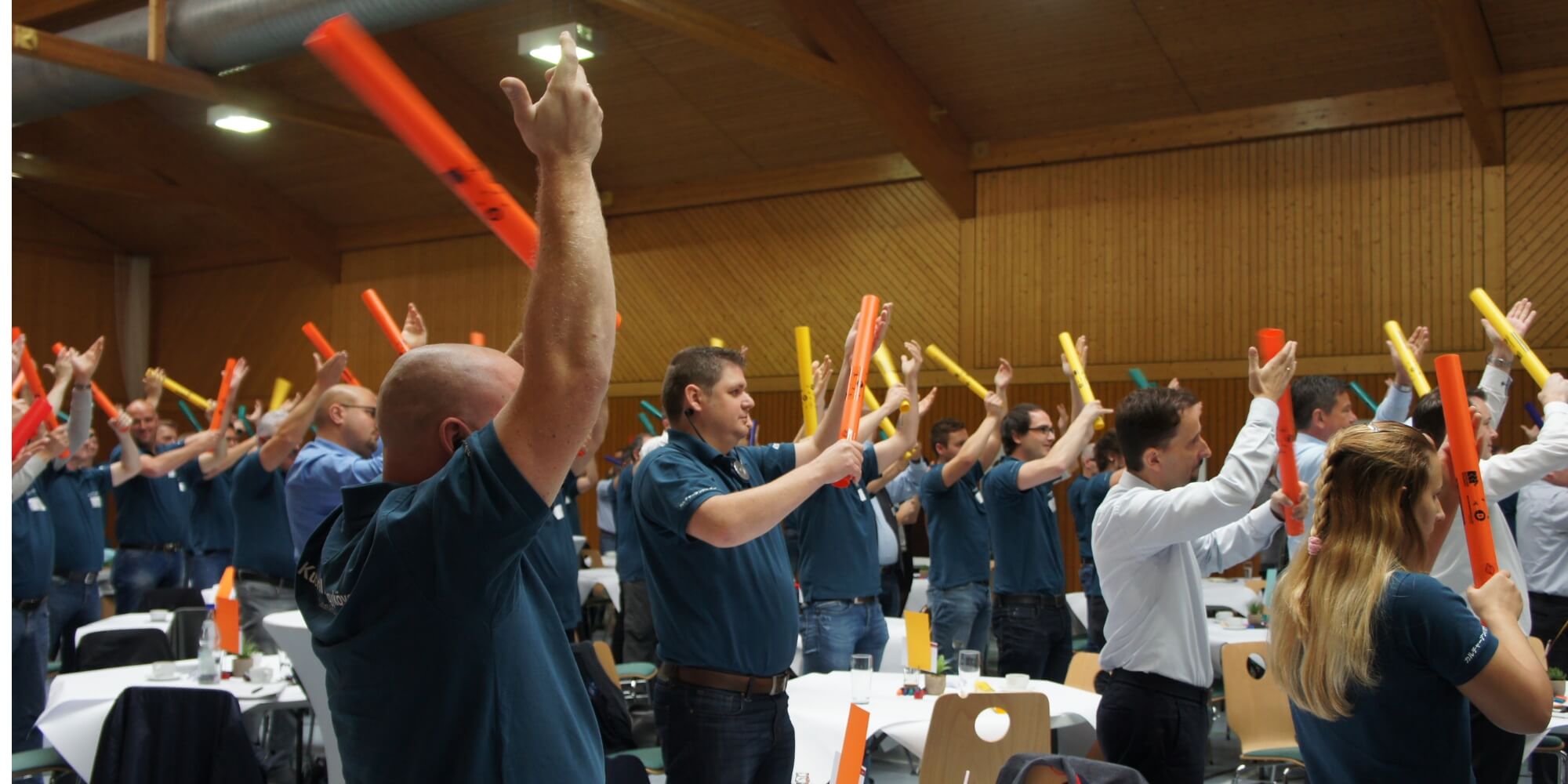
We hosted large-scale Culture Cafés to reinforce a shared identity. These initiatives brought 200 employees from different factories together at a time. These high-energy gatherings built trust, broke down silos, and fostered collaboration across the organization.
The results? Employee engagement soared, sick days dropped from 8% to 2%, accidents fell to zero, and inter-factory collaboration flourished. What started as a collection of separate factories became a high-performing, united network.
Getting to know the spirit of the founder of Ensemble Enabler, Jeffrey Beeson

Determination
If there has been one constant in my life, it is my determination to make things happen. I don’t easily take “no” for an answer. A defining moment early in my career illustrates this.
While in business school, I set my sights on strategy consulting – specifically Bain & Co. My first interview with Bain on the Wharton campus went well, or so I thought. But competition was fierce and I was turned down. Instead of accepting the rejection as final, I saw it as a challenge. I reached out directly to Bain’s European headquarters. I explained that my real interest was in a position in Europe, not Boston. As luck - or persistence - would have it, the European recruiting team was scheduled to visit Wharton the following month. I seized the opportunity and made my case again. This time, I convinced them. Soon after, I had a contract in hand to join Bain’s Munich office.
Openness to Emergence
The world is constantly sending signals. The real question is whether we recognize them. Some of the most pivotal shifts in my career have come from sensing when something significant was unfolding and having the courage to follow that intuition.
One such moment occurred at a conference for the Society of Organizational Learning (SoL) in Boston. Attendees had to pre-register - and pay - for pre-conference workshops. I carefully selected mine in advance. However, on my way to the session, I glanced into an adjacent room and felt an inexplicable pull. Something about the people and the energy in that space told me I needed to be there instead. Trusting my instinct, I switched workshops on the spot.
That decision proved transformative. In that room, I met a leader in the field of large-group facilitation. This is practice that would later become a cornerstone of my work with organizations. Over time, I became a pioneer in harnessing collective intelligence. It all started with a simple but profound decision: listening to a gut feeling that led me to the right room at the right time.
Curiosity
I’ve always been fascinated by how the world works. This curiosity has fueled two lifelong passions: history and science.
My love for history took root early and was shaped by two formative experiences. At 15, my family spent Christmas in Williamsburg, Virginia which is a meticulously reconstructed 18th-century town. I was captivated by the pewter dishes, three-pronged forks, the absence of electricity, and the intricate printing presses. A year later, I had the incredible opportunity to spend a semester as an exchange student in Nîmes, France. Every day on my way to school, I walked past one of the best-preserved Roman coliseums in the world. It is still in use for public performances today. These experiences instilled a deep appreciation in me for how history shapes the present.
On the science side, my curiosity led me down an unconventional path. While majoring in economics, I couldn’t resist enrolling in physics courses. Quantum mechanics captivated me. I became an avid reader of Fritjof Capra whose book The Tao of Physics explored the intersection of physics and Eastern philosophy.
Later Capra made a shift that profoundly influenced my own thinking. In his book The Web of Life, he argued that biology—not physics—would be the defining science of the 21st century. He later expanded on this idea in his book The Systems View of Life which demonstrated that life organizes itself through networks. This insight was a turning point for me. It led me to explore network science and ultimately shaped my approach to leadership.
*This is a selection from an interview with Cynthia Corsetti for Authority Magazine


Danklstraße 30
D-81371 Munich
Phone: +49 89 72 93 97 23
E-Mail: value@ensembleenabler.com